Health Food Ads in Japan: Affiliate Liability, Claim Checks & Mall Listings
Key Points
- Japan's affiliate market is forecast at ¥459.8 billion for FY2025, and its traffic is moving from SEO blogs to social and video.
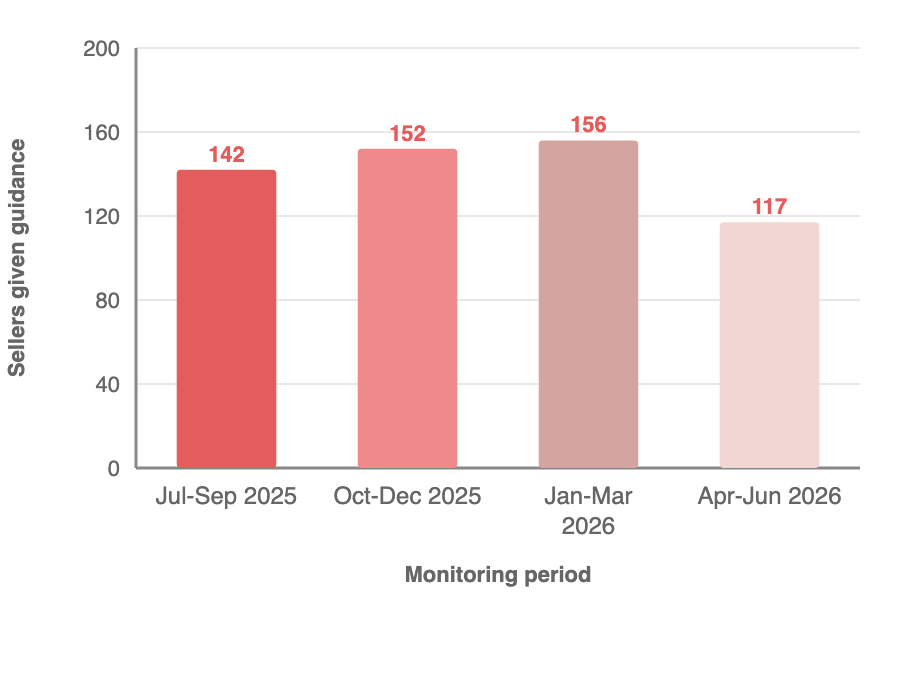
- The CAA flagged 126 health food products from 117 online sellers in April-June 2026, and more than 100 sellers in each of the last five quarters.
- An advertiser that leaves claim wording to affiliates can be held responsible for it, so claims have to be cleared before creators publish.
Supplement claims in Japan reach shoppers through affiliates, creators and mall sellers as well as through brands
Overseas supplement brands usually plan Japanese marketing around their own ads and a few creator deals.
Much of the copy that sells a supplement in Japan is written by someone else.
Yano Research Institute puts the affiliate market at ¥437.9 billion in FY2024, up 6.5%, and forecasts ¥459.8 billion for FY2025¹.
Yano also reports that AI summaries in search results are cutting traffic to SEO media, while social and video channels make up the difference¹.
More of the traffic that used to reach review blogs now arrives through creators' posts.
Mall listings carry much of the rest.
Retail media advertising grew 29% in 2025 to ¥606.6 billion, and ¥523.6 billion of that went to e-commerce operators².
A shopper who clicks through from a creator's video lands on a product page, and that page may belong to the brand or to any reseller that lists the item.
One supplement can therefore be described on the brand's site, in several creator posts, on dozens of affiliate pages and in every mall listing.
The brand writes only one of those.
The CAA checks online health food claims every quarter and flags more than 100 sellers each time
The Consumer Affairs Agency (CAA) searches online health food listings with ordinary keywords and publishes the results every quarter.
From April to June 2026 it found wording that may breach Article 65(1) of the Health Promotion Act in listings for 126 products from 117 sellers³.
Ninety-five of the 126 were capsule, tablet or granule supplements, with claims such as fat burning, immune support, better sleep and firmer skin³.
Where a seller had a storefront on a shopping mall, the CAA told the mall operator and asked it to help correct the listing³.
April to June was the lowest count in five quarters, but every quarter has been above 100 sellers (Chart 1).
In FY2025 the total was 589 sellers and 641 products, and all 589 corrected their listings³.
Under the Premiums and Representations Act, the CAA now relies far more on guidance than on orders.
It issued 13 cease-and-desist orders in FY2025, against 44 in FY2023, while guidance cases rose from 85 to 388⁴.
It also approved 8 commitment plans, four of them involving stealth marketing, and through a separate online-ad monitoring program sent 324 requests to fix wording⁴.
Fewer companies are named in orders.
Far more are asked to change their copy without a public order.
Responsibility for a health claim follows it back to the advertiser, and the affiliate can be liable too
The CAA's guidance on health food advertising says that an advertiser who could decide the content of affiliate posts, but leaves that decision to the affiliates, is the party responsible under both the Premiums and Representations Act and the Health Promotion Act⁵.
That holds even when the advertiser did not know exactly what the affiliate wrote, and the guidance adds that advertisers may need to check what affiliates produce⁵.
Affiliates are not exempt either.
They do not supply the product, so the Premiums and Representations Act does not cover them, but if they take part in deciding the content they can fall under the Health Promotion Act, whose ban on exaggerated health claims applies to "any person"⁵.
The same is true of the affiliate service providers that connect brands with publishers⁵.
A recent order involved exactly this kind of creator content.
On 29 June 2026 the CAA issued an order to Takamitsu Pharmaceutical over its supplements Nobirun and Nobirun C⁶.
The company recruited people, gave them the product free, asked them to post on social media, then reused images from those posts on its own site and its Rakuten and Yahoo!
Shopping stores without saying the posts had been requested⁶.
The CAA treated this as stealth marketing.
A gifted post that a brand reposts on a mall listing counts as the brand's own advertising.
Brands should clear claim wording before creators publish and audit affiliate and mall pages every quarter
For a supplement brand entering Japan, the larger risk is arguably not its own ads but the copy written by creators, affiliates and resellers that nobody at the brand reviews.
Three changes cover most of it.
First, give every creator and affiliate a short list of approved claims and banned wording in Japanese before they write anything, and put it in the contract rather than a style note.
Disclosure rules alone do not handle this, because the claim itself has to stay within what the product's category allows.
The claims the CAA flagged in the last quarter, such as fat burning, immune support and better sleep, are the ones to keep off the list unless the product's category allows them³.
Second, audit affiliate pages and mall listings every quarter, on the same cycle the CAA uses.
The agency finds these pages through ordinary keyword searches³, so a brand running the same searches will see much of what the CAA sees.
Third, treat gifted posts as ads before reusing them.
If a creator's photo goes onto a Rakuten page, the page has to say the post was requested⁶.
Most problems are likely to surface as a guidance letter to a reseller rather than an order against the brand.
That still means rewritten listings and a mall operator that has been told about the seller, which is reason enough to fix the wording before the CAA finds it.
References
- 矢野経済研究所, 2026 · https://www.yanoict.com/summary/show/id/802
- CARTA HOLDINGS・デジタルインファクト, 2026 · https://cartaholdings.co.jp/news/20260127_1/
- 消費者庁, 2026 · https://www.caa.go.jp/notice/entry/047389/
- 消費者庁, 2026 · https://www.caa.go.jp/notice/entry/046370/
- 消費者庁, 2022 · https://www.caa.go.jp/policies/policy/representation/extravagant_advertisement/assets/representation_cms214_221205_01.pdf
- 消費者庁, 2026 · https://www.caa.go.jp/notice/entry/046721/
About MegaEvolution
MegaEvolution is a global influencer marketing agency and platform that connects brands with creators across borders. With local representation in core markets — including Japan, Korea, the United States, Vietnam, Thailand, the Philippines, Indonesia, China, Russia, and more — and services spanning numerous additional markets, we ensure seamless communication and collaboration between brands and creators worldwide.
Global reach. Local expertise. Let MegaEvolution elevate your brand worldwide.
Contact Us
- Official Website: https://www.megaevolution.io
- Contact Form: info@megaevolution.io
- Official Social Media: Instagram / LinkedIn


