AI Disclosure in Indonesia: E-Commerce Rules, Labelling & Creator Briefs
Key Points
- Permendag 19/2026 replaced the 2023 e-commerce regulation in June 2026
- Article 47(2) requires a label when AI produces, displays, recommends or promotes a product
- Brands need a per-asset record of AI use before creator campaigns go live
Indonesia replaced its e-commerce regulation in June 2026, and the new one covers AI
Peraturan Menteri Perdagangan No. 19 of 2026 was signed on 4 June and promulgated on 8 June, and it revokes Permendag 31/2023 [1]. The 2023 regulation is the one most foreign teams were briefed on when they opened marketplace stores, so a compliance note written before June describes a rule that is no longer in force.
The new text adds a clause the old one did not have. Article 47(2) says a business must inform consumers, or apply a label, when goods or services are produced, displayed, recommended or promoted using artificial intelligence [2]. The information has to be true, clear, accurate and accountable. Iqbal S. Shofwan, Director General of Domestic Trade at the Ministry of Trade, said responsibility for the AI use stays with the business, not with the tool vendor [2].
Two details matter for creator work. The duty sits with the merchant selling through the platform, which in most influencer campaigns means the brand or its distributor. And the four verbs reach beyond generated images: a caption written with AI arguably counts as promotion. Platforms carry separate duties under the same regulation, including AI governance scaled to risk and a complaints channel [2]. As reported, the article sets no transition period and no specific sanction. For brands, the question is what to record, not how large the fine is.
A second labelling rule is being drafted, and other regulators are moving the same way
In January 2026 the Ministry of Communication and Digital (Komdigi) said it was preparing a ministerial regulation requiring generative AI content to carry a watermark or label [3]. Edwin Hidayat Abdullah, its Director General of Digital Ecosystem, said unlabelled content could be taken down. The rule is still a draft, with no date attached. It targets AI platforms and electronic system operators rather than brands. Even so, a label applied by a platform will not help a merchant who cannot say which of its own assets were generated.
The financial regulator made a similar move. On 24 June 2026 OJK announced POJK 6/2026, which says financial services firms carry obligations and responsibility for the information conveyed by the influencers they work with [4]. That rule covers only the financial sector, and it concerns creator claims rather than AI. The logic is the same.
Across the three texts, the duty sits with an organisation rather than with the individual creator. The trade ministry puts AI disclosure on the merchant. OJK puts creator claims on the firm that hires the creator. Komdigi's draft puts labelling on the platforms that host generated material. A brand that treats disclosure as the creator's problem, or the agency's, is working from an assumption none of these regulators share.
Record AI use per asset before the campaign, not after a complaint
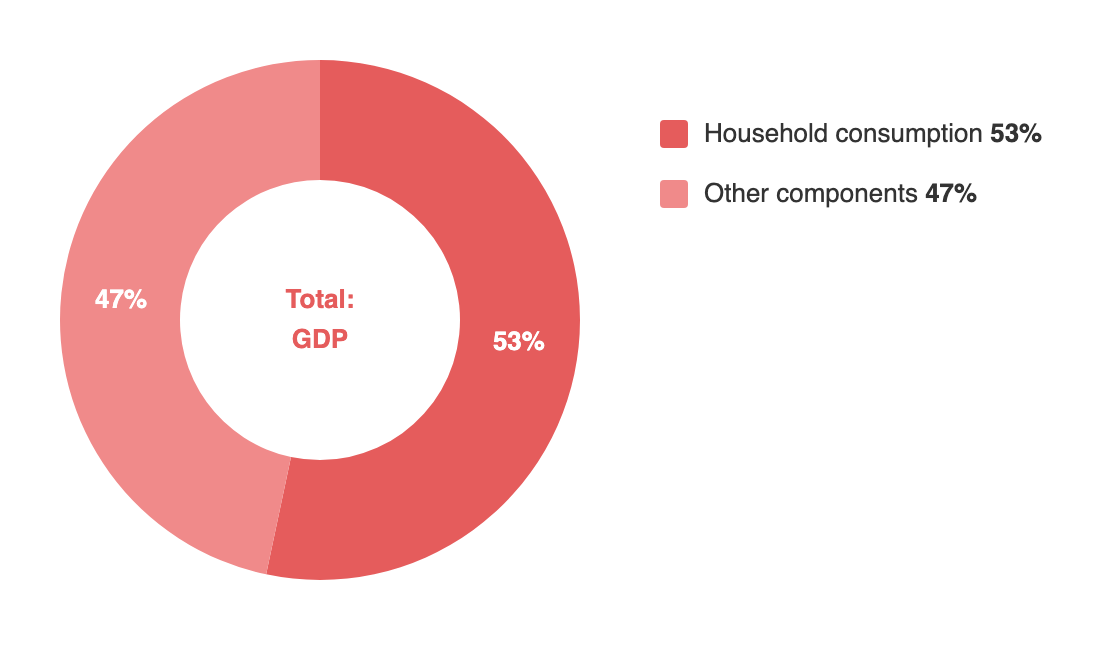
Brands have good reason to do this work now rather than defer it. Household consumption grew 5.06% in the second quarter of 2026 and accounted for 53.32% of GDP [5] (Chart 1). What Article 47 asks for is modest, and it costs less before a launch than after a complaint reaches the platform.
Three changes cover most of it. First, add an AI declaration field to the creator brief and to the asset approval sheet, so every image, video, voiceover and caption is marked as made with or without AI before sign-off. Second, ask agencies and creators to state which deliverables used generative tools. A creator who retouches with an AI filter and one who generates the whole product shot are in different positions, and only the creator knows which applies. Third, carry the label onto the storefront listing as well as the video caption, since "displayed" is one of the four triggers in Article 47(2).
None of this changes creative strategy. It is more likely to change agency contracts, where a warranty on AI use is cheap to add now. Komdigi's watermark rule, once issued, will probably draw on the same record, which is a good reason to build the field once.
References
- JDIH Kementerian Perdagangan RI, 2026 · https://jdih.kemendag.go.id/peraturan/peraturan-menteri-perdagangan-republik-indonesia-nomor-19-tahun-2026-tentang-penyelenggaraan-usaha-perdagangan-melalui-sistem-elektronik-1
- Harian Jogja (Kemendag), 2026 · https://ekbis.harianjogja.com/r-1261163/kemendag-wajibkan-seller-e-commerce-beri-label-pada-iklan-ai
- ANTARA, 2026 · https://www.antaranews.com/berita/5377558/kemkomdigi-siapkan-aturan-konten-buatan-ai-wajib-diberi-label
- Otoritas Jasa Keuangan, 2026 · https://ojk.go.id/id/berita-dan-kegiatan/siaran-pers/Pages/POJK-6-Tahun-2026-Perilaku-Penyampai-Informasi-Sektor-Jasa-Keuangan-Financial-Influencer.aspx
- BPS (Investor Trust), 2026 · https://investortrust.id/macro/111869/pengeluaran-konsumsi-pemerintah-18-62-dongkrak-pertumbuhan-ekonomi-kuartal-ii-2026-sebesar-5-29
About MegaEvolution
MegaEvolution is a global influencer marketing agency and platform that connects brands with creators across borders. With local representation in core markets — including Japan, Korea, the United States, Vietnam, Thailand, the Philippines, Indonesia, China, Russia, and more — and services spanning numerous additional markets, we ensure seamless communication and collaboration between brands and creators worldwide.
Global reach. Local expertise. Let MegaEvolution elevate your brand worldwide.
Contact Us
- Official Website: https://www.megaevolution.io
- Contact Form: info@megaevolution.io
- Official Social Media: Instagram / LinkedIn


